
Deciphering Depreciation: How It Impacts Your Turnkey Rental Business
By Scott A. Stanfield
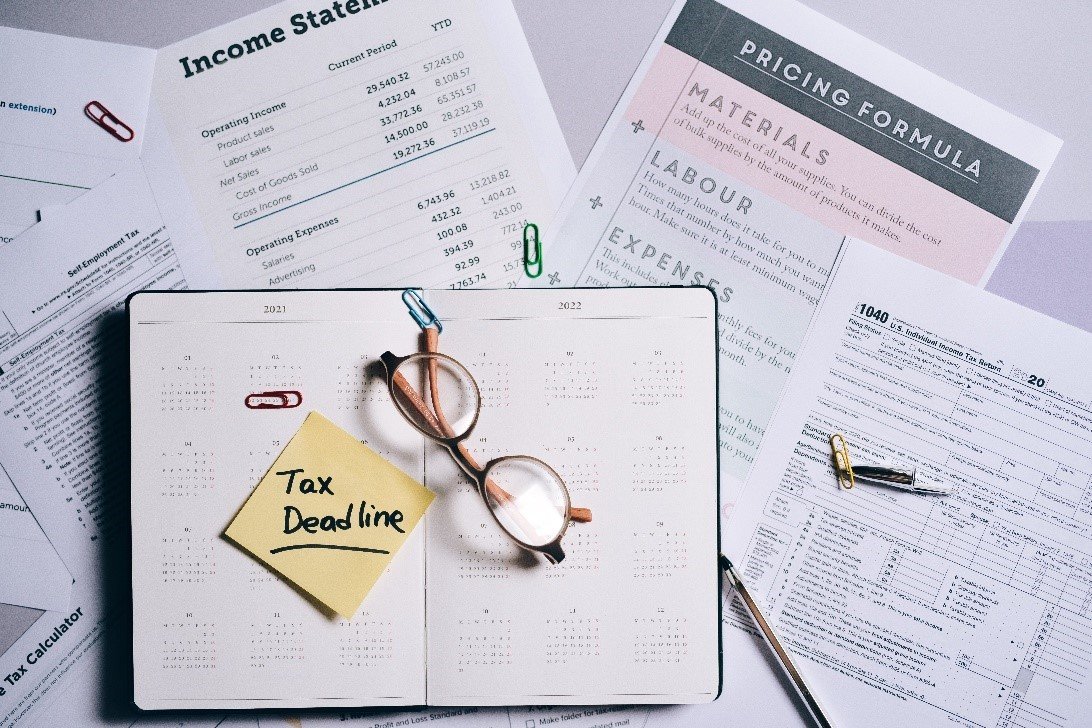
Every astute businessperson knows that understanding the financial intricacies of their venture is crucial. When it comes to the real estate rental business, one of these intricacies is depreciation. But what is depreciation? And how does it directly influence your turnkey rental venture?
The Four Returns
Let’s briefly consider the four returns that determine your earnings from turnkey rental properties:
1. Monthly Cash Flow: The steady income stream.
2. Loan Pay Down: What reduces your mortgage over time.
3. Appreciation: The potential increase in property value.
4. Tax Savings from Depreciation: A silent savior that curtails your tax expense.
While monthly cash flow ensures consistent earnings, the tax savings from depreciation makes it where you keep more of your profits. Depreciation, though not an “expense” in the traditional sense, acts as an offset and can reduce your tax expense to $0 for the property.
The Essence of Depreciation
At its core, depreciation is a tax deduction for the cost of buying and renovating a rental property. For assets with a short shelf life or lower cost such as office supplies, the deductions happen all at once. However, for long-lasting assets like properties, the deduction occurs every year for multiple years when you file your tax return.
The key? The balance sheet for your property will show an expense for depreciation that you never actually paid. What does this mean? The earnings you report to the IRS are reduced in the amount of the depreciation which was not an out-of-pocket expense.
The IRS and Depreciation
The IRS states that a single-family rental property has a depreciable life span of 27.5 years. So, each year, for 27.5 years, you’re entitled to claim depreciation. One thing to keep in mind though, is that only the building “ages” and not the land. When assessing the purchase price of a rental property for depreciation, you need to differentiate between the land and building cost. The value you’ll use for tax considerations, your cost basis, equates to the cost of the building and includes the closing costs.
The Power of Depreciation
Depreciation is intricate, and its impact on taxes profound. To compute the return from depreciation, consider:
• Your original cost basis (purchase price) and depreciation basis (~80% of the cost basis).
• Divide the depreciation basis by 27.5 years.
• Multiply the resulting figure by your tax bracket
For clarity, let’s look at a property priced at $150,000. Taking 80% of the purchase price ($150,000) gives the building’s cost or depreciation basis, which is $120,000.
Depreciation basis = Cost basis x 80%
$150,000 x 0.80 = $120,000
Since depreciation is spread across 27.5 years, this equates to a yearly depreciation claim of $4,363.63.
$120,000 / 27.5 years = $4,363.63 per year
What this means is depreciation reduces the income reported to the IRS by $4,363.63 per year. If your property made $5,000 for the year, which represents the sum of your profit and mortgage principal, then you pay taxes on only $636.37.
$5000 – $4,363.63 = $636.37
When evaluated at a 24% tax bracket, this slashes your tax bill by a notable $1,047.27!
$4363.63 x 0.24 = $1,047.27
Resetting Depreciation
The depreciation deduction is set at the time of acquisition. There are several reasons you might consider resetting the depreciation, a prominent one being ownership of the property for over 27.5 years. This duration marks the point when the asset is fully depreciated, and you can no longer claim a depreciation expense for it.
A less obvious reason has to do with optimizing the return from your rental business. Let’s assume multiple years have gone by and the house you purchased now appraised at $250,000 and you only owe the bank $100,000 for the mortgage. The property has $150,000 in equity which provides you with the opportunity to purchase more properties which will increase your depreciation expense. The following examples will illustrate how selling and refinancing $150,000 worth of equity can affect depreciation.
Selling:
If you sold the property and received the $150,000 in equity (not considering the selling expenses). Then you would have enough funds to cover the down payment of 20% to purchase $750,000 more in properties.
$150,000 / 0.20 = $750,000
The total depreciation would then become $21,818.18 and your tax savings from depreciation would increase from $4,363.63 to $21,818.18!
80% x $750,000 / 27.5 years = $21,818.18 per year
Refinancing:
If you choose to refinance at a loan-to-value ratio of 75%, you will receive $87,500 (ignoring the costs to refinance).
75% x $250,000 – $100,000 = $87,500
The funds received from refinancing could purchase up to $437,500 worth of property.
$87,500 / 0.20 = $437,500
The depreciation for the new acquisition(s) would be $12,727.27. Now, you can claim depreciation on the original property as well as the properties purchased with the funds received from refinancing. This increases your total depreciation to $17,090.90.
80% x $437,500 / 27.5 years = $12,727.27 per year
$12,727.27 + $4,363.63 = $17,090.90
In general, my preference is to refinance but there are many factors to consider. Typically, I would only choose to sell because I have fully depreciated the property although there are plenty of non-depreciation reasons that need be factored in. For example, maybe the roof will need to be replaced in the next few years and you would prefer to sell to avoid the expense.
Targeting Specific Purchases for Depreciation
By carefully considering your purchases, in theory, you can reduce the tax rate of your portfolio to 0% and still have a monthly profit. In practice, it is possible to have an effective tax rate near 0% but challenging to achieve 0% and operate your business efficiently. Regardless, it is worth being strategic with your purchases and strive for an effective tax rate of 0%.
In Conclusion: Don’t Go at It Alone
I’ve intentionally approached this topic from an investor’s perspective. While I haven’t delved into adjusting the cost basis which is important for active real estate investors or the intricacies of calculating depreciation for the first and 27th year (which is prorated), it’s vital for investors to concentrate on leveraging depreciation to enhance their business plan and maximize financial returns. It’s crucial to collaborate with seasoned professionals, especially a CPA who can navigate the complexities of taxation and depreciation. The primary goal is to acquire sufficient knowledge to engage the right experts and maintain a holistic view.
To learn more, visit my website www.scottastanfield.com
If you have a topic that you would like to be covered or any questions, you can also reach me at scott@scottastanfield.com.
Thanks for reading.